
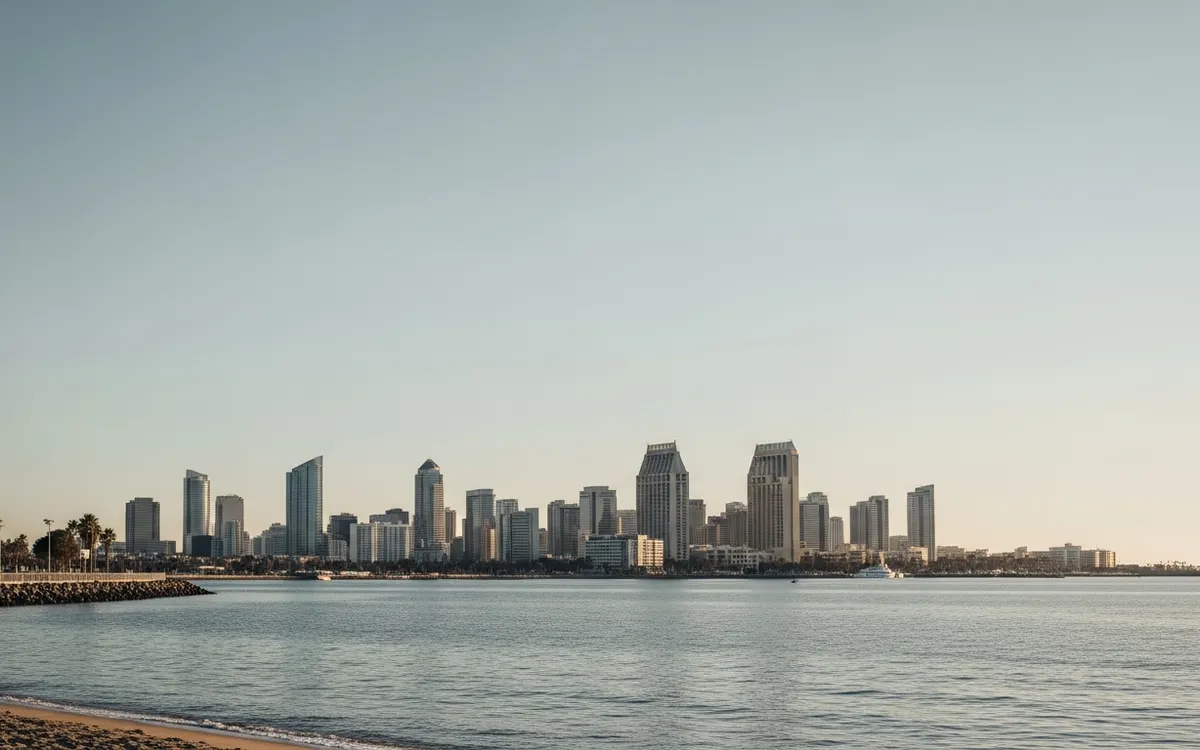
Chula Vista is the second-largest city in San Diego County — roughly 280,000 people spread between the older neighborhoods around Third Avenue Village and the master-planned communities of Eastlake, Otay Ranch, and Rancho del Rey. It sits in the South Bay, closer to the Tijuana border than to downtown San Diego, and that location shapes how residents find care. The specialized outpatient programs in the county tend to cluster well to the north, and the nearest in-person intensive programs in Orange County are an 80-mile haul up I-5. This guide lays out what is actually within reach for someone in Chula Vista who needs help — starting with the fastest options and moving toward longer-term, structured treatment.
If you or someone near you is in immediate danger, stop here and act now. Call 911, or call or text 988, the Suicide & Crisis Lifeline, which connects you to trained counselors 24 hours a day.[1] You do not need insurance, a diagnosis, or a referral to use it.
Start with the crisis line: 888-724-7240
Before anything else, save one local number: the San Diego County Access & Crisis Line at 888-724-7240. It is free, confidential, staffed around the clock, and built for exactly this — suicide-prevention support, crisis de-escalation, and warm referrals into mental-health and substance-use services anywhere in the county, including the South Bay.[2] Interpreter services cover more than 200 languages, which matters in a city where most households speak something other than English at home. The same line is how you reach the county’s Mobile Crisis Response Team when a situation calls for in-person help that is not a 911 emergency.
For non-crisis navigation — finding a counselor, a support group, food, housing, or a clinic that takes your coverage — dial 2-1-1 for 211 San Diego, also 24/7 and multilingual. Think of 988 and 911 as the emergency doors, 888-724-7240 as the behavioral-health front desk, and 211 as the directory for everything around it.
What exists on the ground in the South Bay
Chula Vista has real community resources, though many operate at the county level rather than under a “Chula Vista” banner.
- NAMI San Diego is the National Alliance on Mental Illness affiliate that serves the South Bay. There is no separate Chula Vista chapter; NAMI San Diego is it, and the organization runs a helpline along with family education and peer support groups for people living with a mental-health condition and the people who love them.
- Bayview Behavioral Health Campus (330 Moss Street) is a psychiatric hospital offering inpatient and partial-hospitalization care for adults in acute mental-health crisis — a higher level of care than outpatient, reached in an emergency through 911 or the Access & Crisis Line.
- County behavioral-health and family-resource programs operate within Chula Vista itself, reachable through the Access & Crisis Line, which screens for and routes people into specialty mental-health and substance-use services.
For coverage, California’s Medicaid program is Medi-Cal, and in San Diego County specialty behavioral health is delivered through the county’s Behavioral Health Services system, with the Access & Crisis Line as the entry point. Several managed-care plans operate locally. If you are unsure what your plan covers, the crisis line and 211 can both help you decode it.
Who in Chula Vista tends to need this — and why it can be hard to ask
Chula Vista is younger and more working-class than the postcard version of San Diego, with a median age around 37 and a median household income that actually runs above the national figure. That mix matters. This is a city of families, commuters, and students, not a transient beach town, and the people who need mental-health care here are usually juggling a lot at once.
A few patterns show up again and again in the South Bay:
- Students at Southwestern College, the city’s majority-Latino community college, carry the same anxiety, depression, and burnout as students anywhere — but many are also first-generation, working jobs, and commuting, with no on-campus dorm life to absorb the stress. There is no four-year public university inside Chula Vista, so this is the main higher-education population, and it is one that often delays care.
- Cross-border families living a binational life between Chula Vista and Tijuana face a particular kind of chronic stress — long port-of-entry commutes, split households, immigration worry — that quietly feeds anxiety and depression.
- East-side professionals in Eastlake, Otay Ranch, and Rancho del Rey often look like they have it handled and carry high-functioning depression or anxiety in private, reluctant to be seen walking into a local clinic.
Layered over all of this is cultural stigma. In many Latino and immigrant households, mental-health struggles are still framed as private family matters rather than medical ones, and the instinct is to push through. Naming that openly is part of what good care does — and it is one reason a private, attend-from-home option lowers the barrier for a lot of South Bay families.
Why “resources” has to include dual-diagnosis care
A real map of mental-health resources cannot stop at therapy and crisis numbers, because for a large share of people the problem is not one condition. Depression and heavy drinking. Anxiety and cannabis or stimulant use. Trauma that has quietly turned into a nightly habit of self-medicating. When a mood or anxiety disorder and a substance problem ride together, treating only one tends to leave the other to pull the person back down.
This is what clinicians call co-occurring disorders, or dual diagnosis, and the evidence is clear that the two need to be treated together by one team, not handed off between a “mental-health side” and an “addiction side” that never talk. For Chula Vista residents, that integrated model is often harder to find locally than a standalone therapist or a standalone substance program — which is part of why structured, dual-focused outpatient care is worth knowing about even when it is delivered from outside the South Bay.
How Manifest reaches Chula Vista — and the honest geography
Here is the straight version: Manifest Behavioral Health does not have an office in Chula Vista, or anywhere in San Diego County. Our one physical facility is in Laguna Hills, in Orange County, roughly 80 miles up I-5 — a drive that can run anywhere from 80 minutes on an open freeway to well over two hours at the wrong time of day. Three evenings a week of that is not a treatment plan; it is a reason people give up.
So for the South Bay, the program comes to you. Manifest serves Chula Vista through Virtual IOP — an Intensive Outpatient Program delivered entirely by secure video to anyone physically located in California. An IOP is a defined level of care that sits above weekly therapy and below a hospital: at Manifest it runs about nine hours a week, usually across three evenings, combining skills groups grounded in Cognitive Behavioral and Dialectical Behavior Therapy, a process group with other adults in treatment, individual sessions, and telehealth medication management when a prescriber is part of your plan. Nothing is thinned out for the screen; it is the same schedule, clinicians, and curriculum as in-person IOP, minus the I-5.
Because everything is integrated, Manifest treats depression, anxiety, trauma and PTSD, bipolar disorder, and co-occurring substance use as one course of care rather than separate tracks — the dual-diagnosis approach described above, built in from the start.
Who this fits, and who needs something different first
Virtual IOP tends to be the right call when:
- Weekly therapy has stopped being enough, but round-the-clock supervision is not warranted.
- Symptoms — depression, anxiety, trauma, bipolar disorder, or co-occurring substance use — are in the mild-to-moderate range, and you are safe.
- You have a private, reliable space at home to attend group from. Many Eastlake and Otay Ranch households have a quiet room; in denser western Chula Vista, a bedroom with a door and earbuds does the job.
- A repeated drive north would realistically wreck your attendance.
It is not the place to start if someone is in acute crisis, is having suicidal thoughts with a plan, needs medically supervised detox or withdrawal management, or has lost the daily functioning that outpatient structure depends on. Those situations need a higher level of care first. A trustworthy program says so plainly at intake and helps arrange that step rather than enrolling everyone into the same track. Manifest is an outpatient provider — not a residential, detox, or 24/7 crisis facility.
Keep these where you can find them
For a Chula Vista resident, this is the short list worth saving to your phone today:
- 911 — any medical or safety emergency.
- 988 — the Suicide & Crisis Lifeline, by call or text, 24/7.[1]
- San Diego County Access & Crisis Line: 888-724-7240 — free, confidential, 24/7, multilingual, the front door to county behavioral-health services.[2]
- 211 San Diego (dial 2-1-1) — 24/7 navigation for mental health, housing, food, and social services in 200-plus languages.
- Nearest emergency departments: Sharp Chula Vista Medical Center (751 Medical Center Ct) and Scripps Mercy Hospital Chula Vista (435 H St), both with 24/7 ERs.
A realistic next step
If you live in Chula Vista or anywhere in the South Bay and weekly therapy has stopped holding the weight — or a mental-health struggle and a substance problem have started feeding each other — structured outpatient care is closer than the distance to Orange County suggests. Virtual IOP makes the program portable, and there is no referral required to ask whether it fits. Insurance verification is free, and a good conversation costs nothing but a few minutes.
This article is educational and is not a substitute for individualized clinical advice. If you are in crisis, call 911 or 988.